- Best for
- High-altitude landscapes · Birding · Community travel
- Best months
- May to September for dry, cold conditions; nights are cold year-round at high altitude
- Ideal duration
- 2-3 nights after acclimatisation
- Getting there
- Juliaca Airport, then road to Puno
Introducing Lake Titicaca
Island life beneath high skies.
Field notes
Read the landscape.Meet the wild.
A concise field guide to the landscape, its daily rhythm and the encounters that define it.
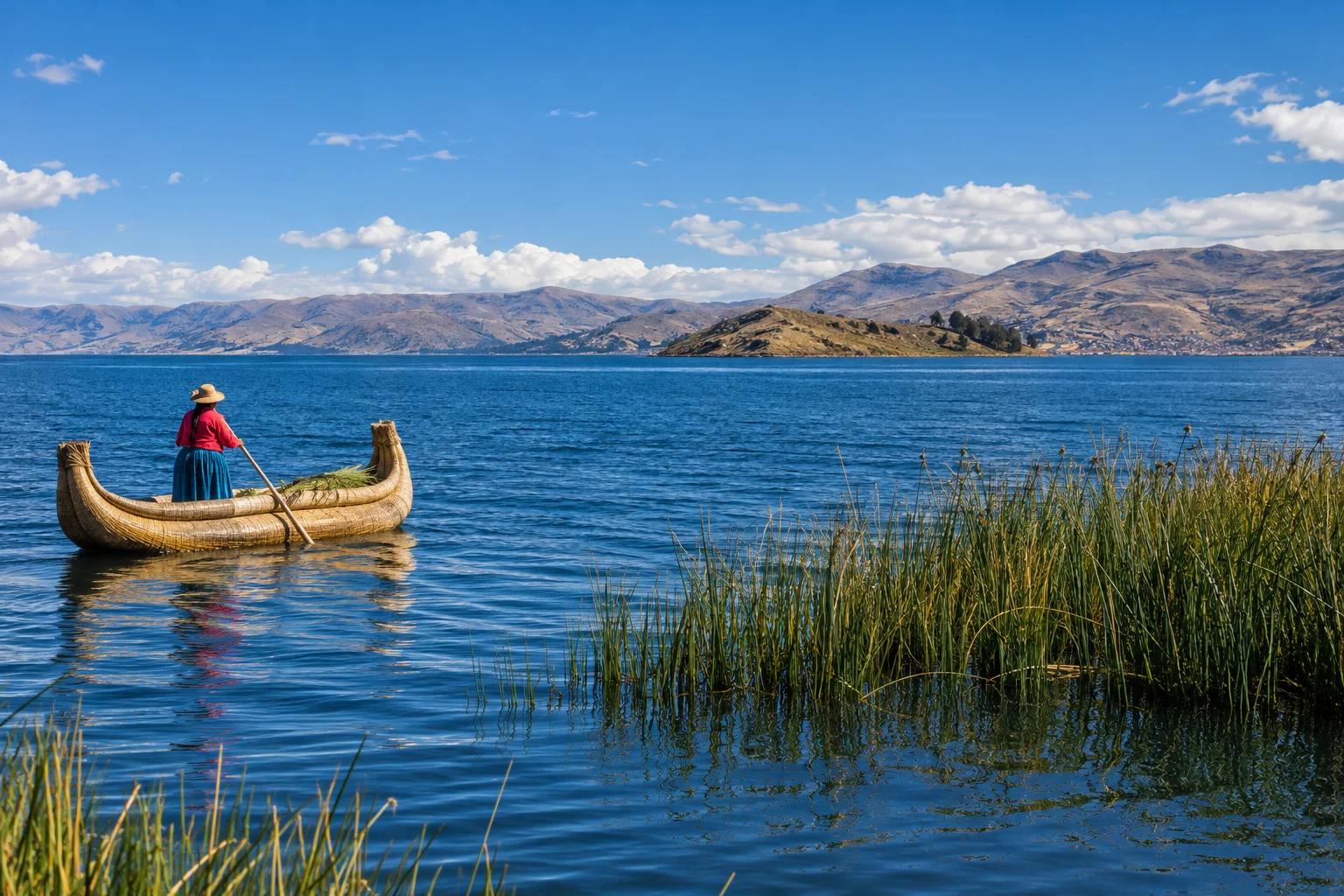
The landscape
Lake Titicaca, read slowly.
High-altitude freshwater lake, reedbeds, islands, puna grassland and broad altiplano
Photo journal
Lake Titicaca,in frames.
Open any photograph to explore the collection in full screen.
Your private journey
Lake Titicaca,
your way.
Tell us what draws you here. We will shape the right season, access, pace and places into one coherent private journey.
Begin planningGood to know
Questions,
answered.
When is the best time to visit Lake Titicaca?
May to September for dry, cold conditions; nights are cold year-round at high altitude. The final dates should follow the exact region, wildlife priority and access pattern.
How long should I stay in Lake Titicaca?
2-3 nights after acclimatisation. This protects useful field time and reduces avoidable transfers.
How do I reach Lake Titicaca?
Juliaca Airport, then road to Puno. At over 3,800 metres, altitude is the main planning issue. Boat conditions and community visits should be paced conservatively.
What is the daily rhythm in Lake Titicaca?
Use a slow first afternoon, then a full lake day with short walks and ample time for cultural interpretation.
What should photographers know about Lake Titicaca?
High UV, reflective water and expansive skies call for polarising control, batteries kept warm and sensitivity around community photography.
Keep exploring
Places to explore.
Extend the journey through landscapes that share a natural rhythm, wildlife story or sense of place.