January 10, 2026 / 4 Min Read
For the Rebari pastoral community of western Rajasthan, reverence for nature is not a philosophy learned—it is a tradition inherited. It comes from elders’ words spoken by firelight, from songs carried across grazing lands, from customs repeated season after season until they become instinct. Faith, land, and livelihood are bound together so tightly that one cannot exist without the other.
Among the Rebari, the earth is never silent. Land, water, trees, grasslands, and animals are understood as living presences, each deserving respect. The desert, which others see as harsh and empty, is known to them as a giver, measured, demanding, but generous when approached with restraint. Movement across this land follows old rhythms. Camps are raised and folded with care. Grazing grounds are entered only after offering respect. Water is drawn with gratitude, not entitlement. These practices are not symbolic gestures; they are obligations passed down through generations.
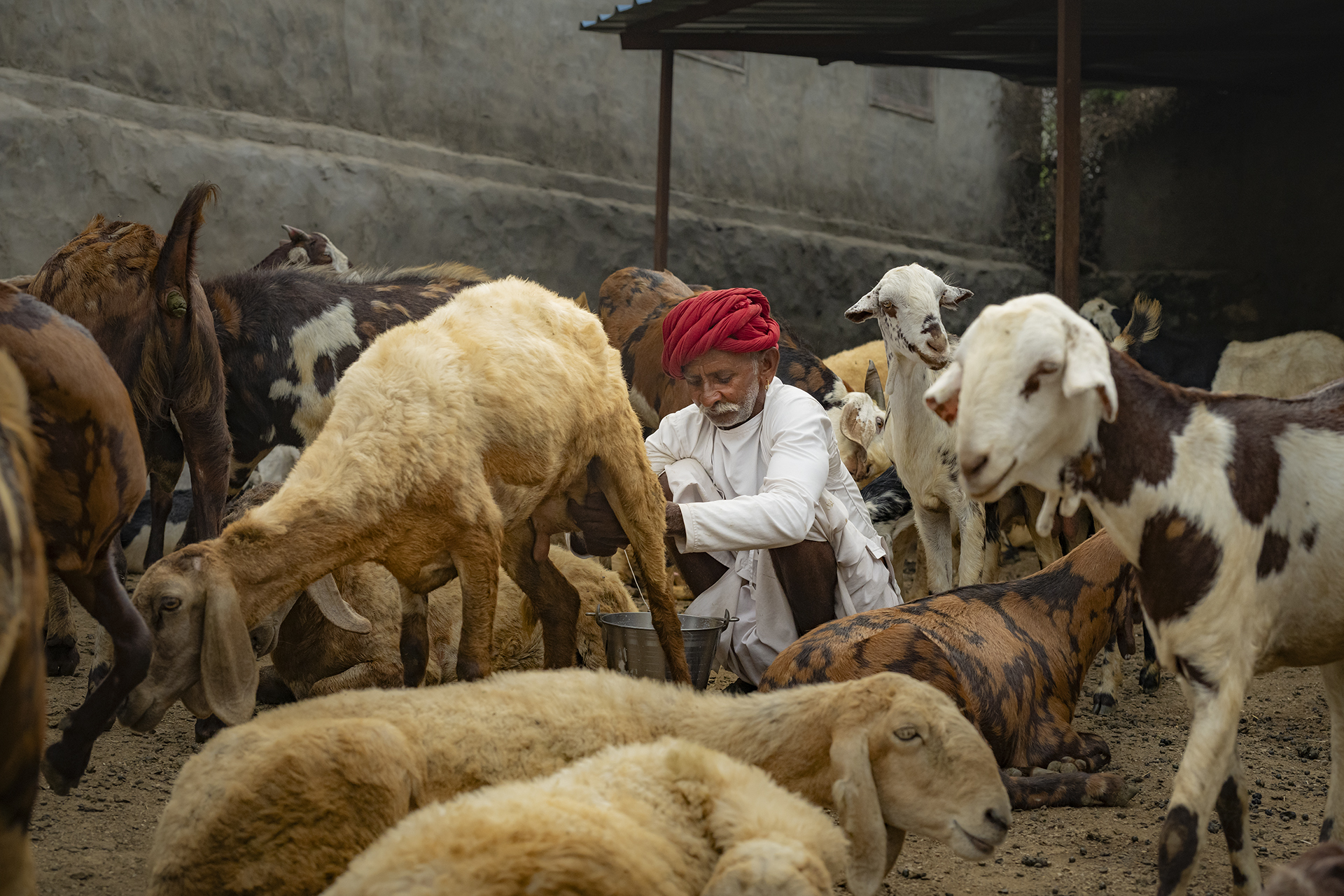
Animals stand at the centre of Rebari life and belief. Camels, cows, sheep, and goats are not possessions but trusts given by the divine. Among them, the camel holds a special place, almost sacred. Its care is a duty, not a transaction. Selling a camel for slaughter is unthinkable, even in times of hunger. The animal’s well-being reflects the moral standing of the herder. Illness in the herd is met with prayer as much as remedy; long journeys begin only after blessings are sought. To protect livestock is to uphold dharma, the right order of life.
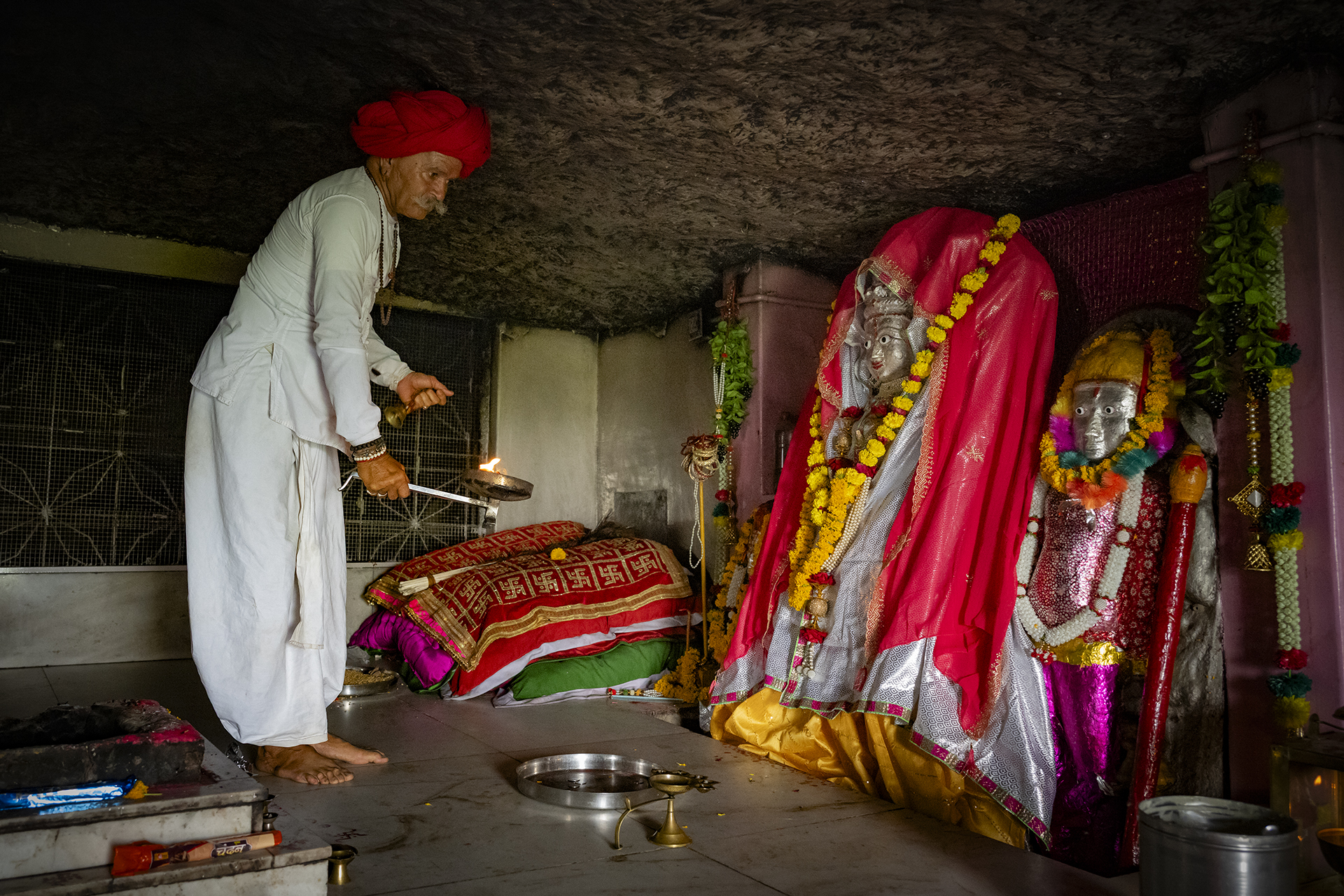
Rebari belief follows no rigid scripture. It is shaped by land and memory, drawing from Hindu devotion while remaining deeply pastoral and animistic. Deities such as Pabuji, protector of camel herders, Ramdevji, and Karni Mata are revered alongside ancestral spirits and guardian forces believed to dwell in wells, groves, stones, and crossroads. Sacredness is local, rooted, and familiar. The land itself is a shrine.
Pilgrimage is part of this old way of life. Though always on the move, the Rebari undertake journeys to temples and shrines, often along routes that align with seasonal migration. These are not separate religious acts but continuations of everyday existence. Walking becomes worship. The road itself carries blessing. Such journeys are made to ask for rain, fertile herds, safe passage, and harmony between people, animals, and land.
Every passage of life is marked by ritual. Births, marriages, and deaths follow customs carefully observed and guarded by elders. Oral histories, prayers, and songs ensure that knowledge survives not on paper, but in practice. Milk, food, incense, and quiet invocations bind individual lives to ancestral presence and cosmic rhythm.
At the heart of Rebari identity lies their origin story, recorded in historical accounts such as the Marwar Census Report of 1891. It tells of Shiva and Parvati, of the creation of the camel, and of the first Rebari, made not to rule animals, but to care for them. Shiva’s command was clear: live beyond settled society, wander with the herds, and sustain life where others cannot. Pastoralism, in this telling, is not work—it is destiny.
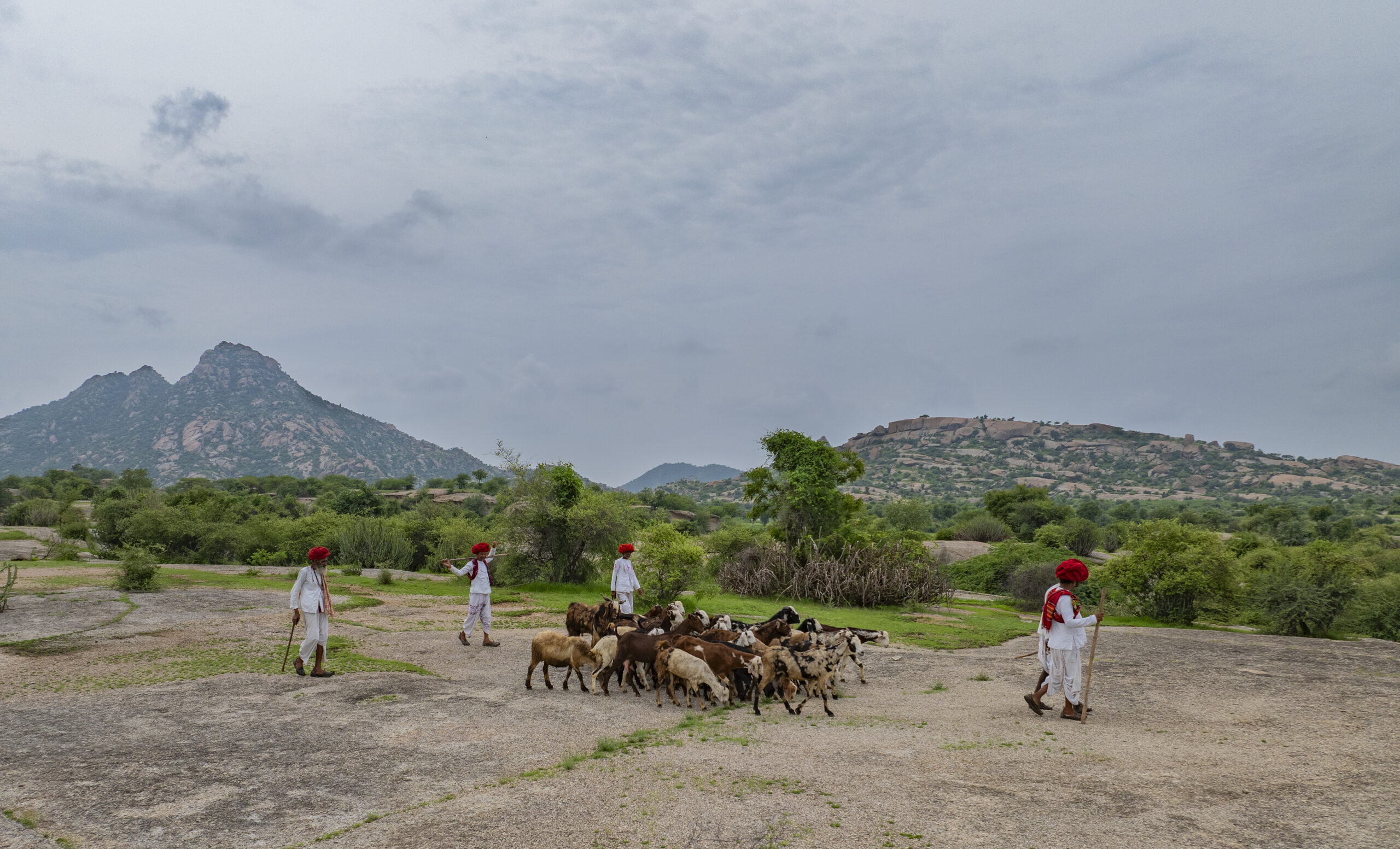
This traditional reverence reveals itself most clearly in Jawai, where the Rebari live alongside leopards in a relationship shaped by age-old restraint. Granite hills, older than memory, shelter leopards in their natural caves. These spaces are accepted as part of the land’s order, not feared or challenged.
When a leopard takes livestock, the response is acceptance, not revenge. Leopards are understood as rightful dwellers of the land, acting according to nature’s law. To harm them would be to disturb balance. Grazing routes shift, camps are placed carefully, herds are moved with awareness. The land is read patiently, through tracks, silence, and sign, just as it has always been.
Leopards are considered divine.. They are neighbours. Their presence is acknowledged with respect.. This quiet coexistence has endured not because of rules or enforcement, but because tradition demands restraint. As Jawai gains attention today, the Rebari remain its steady heart. Their herds still follow ancestral paths. Their reverence for earth, animal, and predator, remains unchanged.
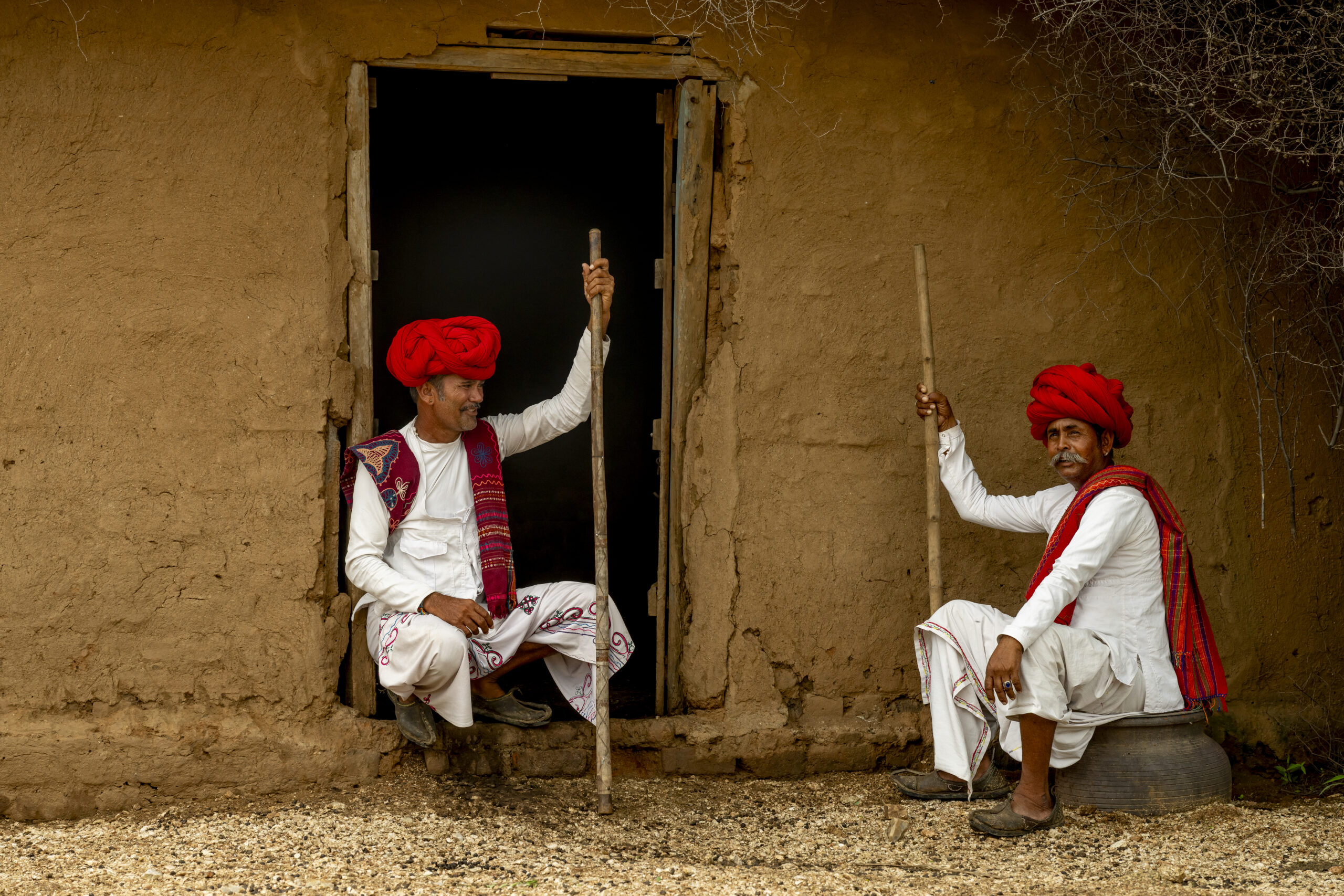
In a changing world, the Rebari hold fast to old ways. Their lives remind us that tradition is not resistance to time, but continuity with it, and that reverence for nature, when lived daily, can keep land, people, and wilderness in balance.